Behind the Scenes: the Little Concierge That Lives in Your Phone
It is 23:47 on a Tuesday in May. One of our guests, who has just arrived in Rome on a delayed flight, is standing at the front door of the apartment and cannot remember the entry code. She…
In this article
It is 23:47 on a Tuesday in May. One of our guests, who has just arrived in Rome on a delayed flight, is standing at the front door of the apartment and cannot remember the entry code. She had received it days earlier by email, but that email is somewhere in an inbox that refuses to open on 4G.
In a parallel life there would have been a phone call, a staff member jolted awake, half an hour of tension. In ours, instead, the guest opened the chat from the link she had received at online check-in, wrote in Spanish “no me acuerdo el código”, and had her answer in three seconds. Code, photo of the front door, instructions for the floor. Good night.
That “someone” who replied is called mydeluxe.it. It is the digital concierge that every Deluxe Apartments guest finds on their phone from the moment of booking right through to check-out. We built it ourselves over the past several months, and it is one of the projects we are most proud of. It is worth telling the story.
Why it exists
Luxury hospitality has a small paradox: the more carefully considered the home, the more the guest wants to feel looked after — yet the less they want to feel someone hovering over them. They want a helping hand when needed, and silence when not. They want an answer at 23:47 without thinking that someone on the other end had to get out of bed.
That has always been the concierge’s trade. Only outside five-star hotels with a hundred staff members, it is a trade that struggles to keep going 24 hours a day — especially when the properties are spread across Rome, Assisi, Jesolo and the Veneto hinterland. Hence the idea: build an always-present assistant that does not replace our team, but takes off its hands the hundred thousand small, repetitive questions and leaves it time for the things that matter.
What it can do
From the outside it looks like any other chat. On the inside, it is a combination of five or six different tools working together.
It knows who you are. When a guest opens the link, the concierge already knows their name, which property they will be staying in, the dates, and what language to use. No “good morning, how may I help you”. It starts straight from “Stefania, your arrival in Rome is two days away — would you like a suggestion for dinner on your first evening?”
It speaks five languages. Italian, English, French, Spanish and German, interchangeable within the same conversation. The guest writes in French, receives a reply in French. If for some reason — it happens — they switch language mid-chat, the concierge follows without asking questions.
It listens to voice messages. For many guests, especially less tech-savvy ones, speaking is more natural than typing. You hold down the microphone in the chat, leave a thirty-second voice message, and on the other end comes a perfect transcription — in any language — and a written reply. It is useful when you are out in the city with your phone in one hand and an ice cream in the other.
It looks at photos. This is the feature that surprised even us the most. When something in the apartment is not working — a light bulb, a hob knob, a remote control that refuses to cooperate — the guest takes a photo and sends it in the chat. The concierge looks at it, understands what it is, gives instructions if the problem can be solved independently, or opens a ticket for our local technician with a diagnosis already prepared. No “could you describe the fault?”
It builds itineraries. If a guest asks “what should I visit in Rome over two days with young children, without too much walking”, the concierge does not reply with a generic list copied from TripAdvisor. It takes about thirty seconds, puts together a real route — museums, stops, restaurants, breaks in the park — calculated on the distances from the specific property where the guest is staying. At the end of the process a link appears to a printable, shareable, translatable page that the guest can keep open throughout their stay.
It anticipates problems. This is the last feature we added, and the one we are most proud of. Every morning the concierge “reads the news”: weather at the destination, alerts, local public holidays, events that could affect the guest’s day. If it spots something relevant — heavy rain on the day of a boat trip, a transport strike, a procession in the centre closing the streets — it sends a proactive message. A sort of local friend who warns you: “heads up, today…”
The philosophy
There was one thing we cared about deeply: the concierge must not be there to hide our staff behind a wall of artificial intelligence. That is the downfall of every bot you have ever hated. It must be there to remove the background noise for both the guest and our team, leaving room for the exchanges that actually matter.
That is why we built an internal function we call the “mood meter”. If during the conversation the concierge senses that the guest is struggling — frustration, anxiety, something that has not been resolved after two or three exchanges — it does one simple thing: it calls us. It sends an alert to the on-duty staff member, who with a single tap enters the chat in place of the bot and takes over the conversation. The guest sees a small banner appear: “a member of our team is now with you”, and the tone shifts. The machine steps aside.
That is the principle behind everything: do not replace the human where the human is needed, but give them a pair of superpowers to arrive sooner where it counts.
What is under the bonnet (without getting boring)
The concierge is built on one of the best artificial intelligences available today: Claude, developed by Anthropic, one of the leading American companies in the field. The rest is our own craft: a small catalogue of 133 points of interest curated by hand across the four cities where we work, a map of each of our properties with its own quirks (the window that creaks, the TV that needs a specific remote, the oven that has a personality of its own), and a collection of everything that ten years of guests have asked us at least once.
It is not an off-the-shelf product. It is something we continue to tend to every week — reading real conversations, fixing cases where the concierge got things wrong, adding knowledge where it was missing. It is our way of growing as a hospitality brand without becoming a chain.
You will get to try it
If you are among our guests, you will find it waiting for you before your first stay. It arrives by email a few days before check-in, with a short link. From that moment it is your point of reference for everything: access codes, directions, recommendations, reports.
If you are not yet, and curiosity about seeing it in action is tempting you, the simplest way is to choose one of our properties and book a stay. We have boutique apartments in Rome, in Assisi, in Jesolo and in the Veneto hinterland. Behind each one, now you know, there is also this little digital concierge. Alongside our team, which is what truly makes the difference.
Have a wonderful weekend.
More ideas from the blog

Open on Ferragosto: Tazio, our four-legged reservations manager
While half of Italy is at the beach and the other half is stuck on the motorway, here at Deluxe Apartments work doesn’t stop. In fact, we’ve expanded the team. Meet Tazio, Hungarian Vizsla, head of reservations for 15 August 2026. Response rate: 100%. Cancellations: zero. Average rating on his most recent calendar reviews:…
Superhost for the second year running: 4.98 rating and Airbnb’s top 10%
There’s some news we’d like to share, because it’s directly connected to how we work every day. For the second consecutive year without interruption, Deluxe Apartments has confirmed its Airbnb Superhost status. This is a recognition you can’t buy or inherit. You earn it stay by stay, response by response, detail by detail. What…
The Kolors at Rocca Maggiore: Assisi Summer Festival, 16-18 July 2026
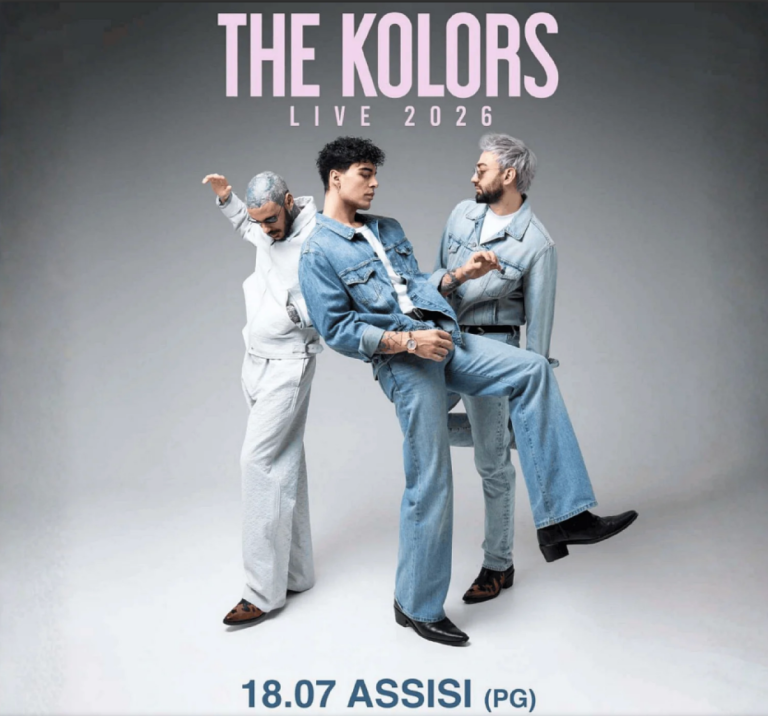
Three evenings, three artists, one location that has no equal. From 16 to 18 July 2026, the Rocca Maggiore in Assisi becomes the most spectacular stage of the Umbrian summer for the fourth edition of Assisi Summer Festival, and the closing night brings one of Italy’s most popular acts to the city: The Kolors….

